May 13, 2026 • Callum Reeve • 8 min reading time • Specs verified June 5, 2026
From Your First Mora to a Real Field Knife: The Fixed-Blade Upgrade Ladder Explained
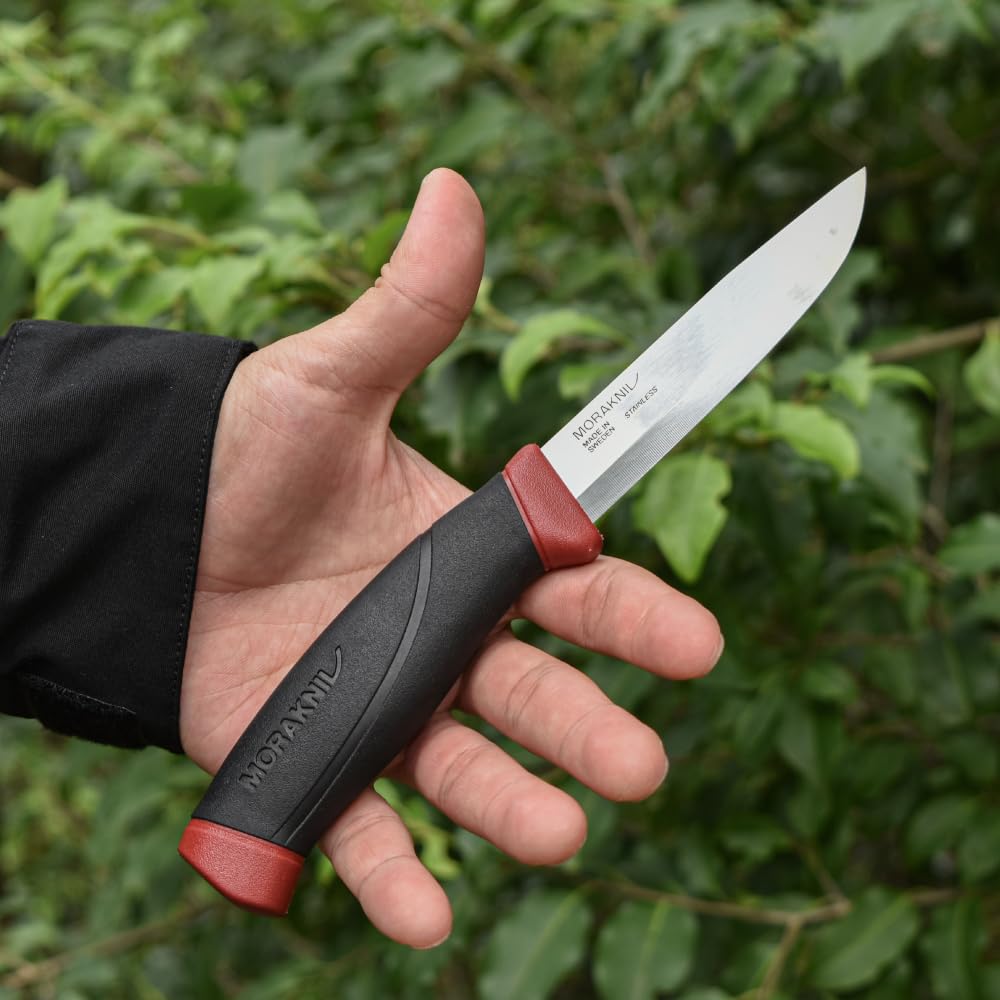
A fixed-blade knife — meaning a knife with a solid, non-folding blade that has no moving parts — is one of the oldest tools humans have carried into the field. Unlike a folding pocketknife, a fixed blade is stronger at the point where blade meets handle (called the “tang”), easier to clean, and faster to draw when your hands are wet or cold. The Morakniv Companion (often just called a “Mora”) is the knife that introduces most people to quality fixed blades: it’s a Swedish-made knife that costs around $20–$30 and routinely outperforms knives at triple its price. If you’ve been using one and wondering whether it’s time to spend more — or what you’d actually be buying when you do — this guide maps the full ladder from first Mora to premium field knife, names the honest tradeoffs at each step, and ends with a clear decision rule.
| EDITOR'S PICK[Gerber Gear StrongArm Fixed Bla](https://www.amazon.com/dp/B00U0ILXGC?tag=greenflower20-20)… | Mid-tier[Condor Bushlore Knife - Bushcra](https://www.amazon.com/dp/B002CC6BPM?tag=greenflower20-20)… | Budget pick[Morakniv Companion Fixed Blade](https://www.amazon.com/dp/B004ZAIXSC?tag=greenflower20-20)… | |
|---|---|---|---|
| Steel Type | — | 1075 High Carbon Steel | Stainless Steel |
| Blade Length | — | 4.3in | 4.1in |
| Edge Type | Plain edge | — | — |
| Sheath Included | — | ✓ | — |
| Grind | — | Scandi Grind | — |
| Blade Thickness | — | 3mm | — |
| Price | $109.99 | $62.04 | $15.62 |
| See on Amazon → | See on Amazon → | See on Amazon → |
Why the Mora Sets the Bar So High — and Where It Stops
Let’s start where most of us started. The Mora Companion ships with either a carbon steel or stainless blade, a high-friction rubber handle, and a basic plastic sheath. Knife Informer’s review of the Companion notes that its Scandi grind — a flat, single-bevel geometry that goes right to the edge with no secondary bevel — makes it one of the easiest knives in the world to put a hair-popping edge on with basic tools. That geometry, combined with a blade that’s genuinely thinner and more acute than most “tactical” knives three times the price, is why the Mora punches above its weight for woodworking, food prep, and camp chores.
So what are you actually giving up at $25?
The honest list:
- Tang depth. The Mora uses a “partial tang” — the steel extends partway into the handle, not all the way through. For batoning (splitting wood by driving the spine of your knife through a log), prying, or any real lateral stress, that’s a genuine weak point.
- Steel volume and blade thickness. Mora blades are slender. Great for slicing; not great for the repeated lateral stress of heavy camp processing or guide-volume skinning work.
- Sheath system. The stock plastic sheath is functional but basic. No Tek-Lok, no Kydex tension adjustment, no fire-starter integration.
- Handle ergonomics at volume. For occasional camp use, the rubber grip is fine. For eight hours of guiding clients through a elk field dressing, long-session fatigue is a real complaint in aggregated owner reviews.
None of these are reasons to stop using a Mora. They are reasons to think about what problem you’re actually solving before you spend $150 more.
The Mid-Tier Sweet Spot: $80–$250 and What the Money Buys
This is the zone where the upgrade ladder gets genuinely meaningful. The core improvements you’re buying fall into three categories: steel quality, handle ergonomics at sustained use, and full-tang construction.
Steel: The Alphabet Soup Decoded
At the mid tier, you’ll mostly encounter three steel families:
1084 and 1095 high-carbon steel — simple, tough, easy to sharpen in the field, excellent for batoning and hard use. Rusts if you neglect it. ESEE Knives (their 4, 5, and 6 models) use 1095 with a powder-coat finish to slow corrosion. BladeForums long-arc owner threads on the ESEE-4 consistently describe blades still in rotation after five-plus years of hard use with no structural failures reported. That’s the steel’s toughness story — it bends before it chips.
D2 tool steel — a semi-stainless steel with higher chromium content than simple carbon steels but not technically stainless. Harder than 1095 (typically 60–62 HRC, where HRC is the Rockwell hardness scale — higher numbers mean harder, which improves edge retention but can make sharpening more demanding). Benchmade has used D2 in several of their fixed-blade lines. Better edge retention than 1095, slightly more demanding to sharpen, meaningfully better corrosion resistance.
S35VN and 20CV (premium stainless) — these start appearing at the upper edge of the mid tier and define the premium tier above it. Knife Steel Nerds’ analysis of S35VN describes it as a steel engineered by Crucible Industries specifically to improve on S30V’s toughness while maintaining its excellent edge retention. You won’t chip it fielding normal work, it holds an edge through guide-volume processing, and it won’t rust if you forget to oil it after a wet day. The cost: it’s noticeably harder to re-sharpen without good stones or a strop.
By the Numbers: Steel Tradeoffs at a Glance
| Steel | Approx. HRC | Toughness | Edge Retention | Field Sharpen Ease |
|---|---|---|---|---|
| Mora 12C27 stainless | 57–59 | Moderate | Moderate | Easy |
| 1095 carbon (ESEE) | 56–58 | High | Moderate | Easy |
| D2 tool steel | 60–62 | Moderate | Good | Moderate |
| CPM-3V | 60–62 | Very High | Good | Moderate |
| S35VN | 59–61 | Good | Very Good | Moderate–Hard |
Source: published spec data compiled by Knife Steel Nerds; Rockwell ratings represent typical manufacturer targets, not guaranteed minimums.
Knives Worth Knowing at This Rung
ESEE-4 (~$100–$130): Full-tang, 1095 carbon, near-indestructible reputation in aggregated owner testimony. Outdoor Life’s 2025 fixed-blade buyer guide names it among the top hard-use field knives in the under-$150 window. The modular sheath system (compatible with multiple carry configurations) is frequently cited as a reason buyers stick with the platform.
Benchmade Saddle Mountain Skinner or Steep Country (~$160–$200): Purpose-built for hunters. S30V or CPM-20CV depending on variant. Owners consistently report these blades holding a working edge through multiple elk or deer without repriming — meaningful if you’re doing volume work on a guided hunt.
Bark River Bravo 1 (~$200–$280): This is where American craftsmanship starts entering the picture. CPM-3V steel with convex grind (a gently rounded edge geometry that combines cutting performance with chip resistance). BladeForums threads on the Bravo 1 run long and enthusiastic — owners routinely describe five-plus years of hard use with the knife improving over time as the convex edge settles. Available in a staggering range of handle materials (Canvas Micarta, stabilized wood, G10) that affect grip texture and moisture resistance.
The Premium Tier: $300–$800+ and Who Actually Needs It
Here’s where we have to be straight with you: most people don’t need to spend $300+ on a field knife. The ESEE-4 at $110 will do 90% of what a $600 Chris Reeve does, and it’ll do it without making you wince when you use it hard.
What the premium tier genuinely buys:
Fit and finish at a level where the knife disappears in your hand. Chris Reeve Knives (their Nyala or Pacific models) and William Henry fixed blades are assembled to tolerances that eliminate every small friction point — the handle-to-blade transition, the sheath draw tension, the balance point. For guides who carry a knife nine hours a day for 90 days of a season, that tactile precision reduces fatigue in ways that are hard to quantify but real.
Steels with genuine performance advantages for specific use cases. CPM-3V, per Knife Steel Nerds’ detailed toughness analysis, offers a combination of impact toughness and edge retention that outperforms almost any other steel in cold-weather hard use — relevant if you’re field dressing in sub-zero temperatures where brittle failure in harder steels becomes a real risk. Steels like Magnacut (newer, increasingly available from custom makers as of 2025–2026) are showing corrosion resistance comparable to H1 with edge retention approaching S35VN. Worth watching.
Maker provenance and secondary market value. A Bark River Bravo in stabilized maple holds its secondary-market value better than almost any mass-production knife. A custom from a well-regarded American Bladesmith Society journeyman or master may appreciate. This matters to collectors; it’s irrelevant to guides who need a working tool.
Handle materials that actually change the experience. Micarta (a fabric-and-resin composite) becomes more grippy when wet, doesn’t swell, and develops a personal patina. Stabilized wood has the aesthetics of natural wood without the moisture vulnerability. G10 (a fiberglass laminate) is nearly indestructible and provides excellent texture in any temperature. These aren’t luxury choices — in sustained wet-weather use, handle material quietly determines whether you want to keep using the knife or stop.
The Decision Framework: If X, Then Y
You’ve read the ladder. Here’s how to place yourself on it.
If you’re doing occasional camp cooking, kindling prep, and general outdoor chores 10–20 days a year: Your Mora is not the problem. Spend $0. If the partial tang bothers you emotionally, buy an ESEE-4 and call it done.
If you’re processing game — birds to elk — at moderate volume (1–5 animals a season) and want a no-drama upgrade: Mid-tier is your zone. The ESEE-4 (carbon, tough, field-sharpenable) or a Benchmade Steep Country (stainless, edge-retaining) covers it. Budget $100–$180 and don’t overthink the steel.
If you’re a guide, outfitter, or working hunter doing volume processing (10+ animals a season) or operating in sustained wet/cold conditions: The Bark River Bravo 1 in CPM-3V earns its price. The steel’s toughness at low temperatures and the convex edge’s long-term durability under guide-volume use are documented in long-arc owner testimony on BladeForums. Budget $220–$280 and invest in a quality sheath setup.
If you’re a collector, a bushcrafter who’s found a discipline you’ll practice for years, or someone for whom the object itself carries meaning: The premium tier is a legitimate expenditure. Chris Reeve, William Henry, or a custom from a vetted ABS maker (americanbladesmith.com maintains the journeyman and master smith registry) will deliver an object that rewards ownership at every level. Budget $350–$600 and buy from an authorized dealer or direct from the maker to avoid the gray-market deposit traps that have stung buyers in limited-run waitlist situations.
One rule that holds at every tier: Buy the best sheath you can find for whatever knife you choose. A $25 Mora in a well-fitted Kydex sheath with a proper belt attachment is more useful in the field than a $400 blade riding in a floppy leather pouch. The sheath is the interface between the knife and your actual day — it deserves as much thought as the steel.
The Mora isn’t a beginner knife you graduate from. It’s a reference point that keeps you honest about what you’re actually buying when you spend more.