June 1, 2026 • Callum Reeve • 9 min reading time • Specs verified June 5, 2026
ESEE Fixed Blades Under Real Scrutiny: 1095 Steel, Sheath Systems, and the Forum Testimony That Matters
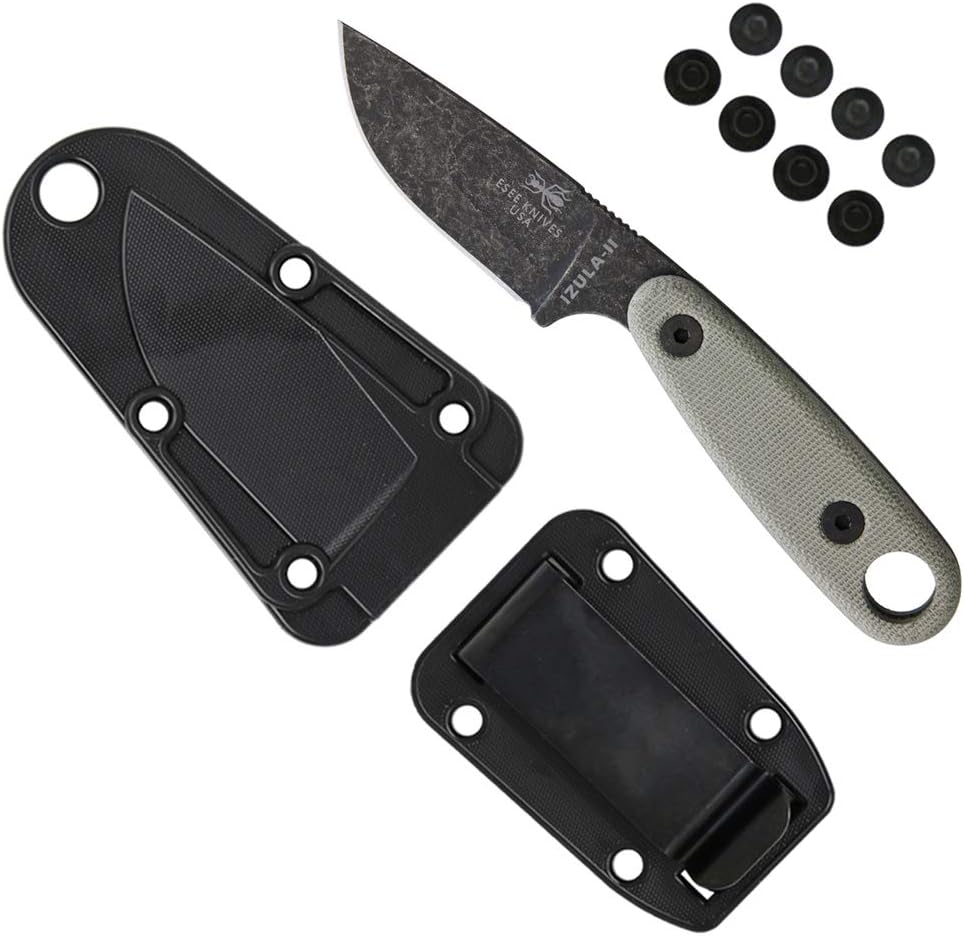
ESEE Knives occupies a specific, well-earned lane in the fixed-blade market. A fixed-blade knife — unlike a folding pocketknife — has no hinge or moving parts; the blade runs as a single piece of steel into the handle, which makes it stronger and simpler. ESEE (pronounced “EE-see,” standing for Escuela de Supervivencia de Emergencia y Evasion) is an American company that grew out of an actual wilderness survival school in Peru. That origin isn’t marketing copy — it shaped a design philosophy rooted in field use over showroom appeal. Their blades typically run $80–$150 at retail, which puts them squarely in the mid-tier bracket: more capable than a budget starter knife, considerably more accessible than premium custom work. If you’re deciding whether an ESEE belongs in your kit — or you already own one and want to understand it better — this article maps what the steel choice means in practice, how the sheath system actually functions, and what owners consistently say after years of real use.
Why 1095 Carbon Steel? The Trade You’re Actually Making
ESEE’s flagship models — the ESEE-3, ESEE-4, ESEE-5, and ESEE-6 — all run 1095 carbon steel at a Rockwell hardness (RC) of approximately 55–57. Rockwell hardness is a standardized scale for measuring how resistant a steel is to being scratched or dented; higher numbers mean harder, more wear-resistant steel, but also more brittleness. At 55–57 RC, ESEE has deliberately chosen a softer-end-of-mid-range hardness. Here’s why that matters.
The performance case for 1095 at this hardness: Per analysis from Knife Steel Nerds’ breakdown of 1095 composition and heat treatment, 1095 is a simple high-carbon steel — roughly 0.95% carbon, with minimal alloying elements. That simplicity is a feature, not an oversight. At 55–57 RC, it is exceptionally tough — meaning it resists chipping and breaking under lateral stress or heavy chopping — rather than maximizing hardness and edge retention. For a survival or bushcraft knife that might baton wood (drive the blade through logs by striking the spine with another piece of wood), pry, dig, or get leveraged hard against bone, toughness matters more than the ability to hold a razor edge through a hundred slicing tasks.
The trade-off you’re accepting: 1095 at this hardness will not hold an edge as long as steels like CPM-3V, S35VN, or even Bohler N690. Owners across multi-year threads on BladeForums consistently note that an ESEE will need touching up more frequently than a blade running a harder, more complex alloy. The flip side — and long-run owners emphasize this — is that when the ESEE does need sharpening, it responds quickly and easily to simple tools. A cheap diamond rod or a Spyderco Sharpmaker brings it back fast. You’re not chasing a finicky super-steel; you’re maintaining a simple, honest workhorse.
One more practical note on 1095: It rusts. Carbon steel without the chromium content of stainless alloys will develop surface rust in moisture-heavy environments if you ignore it. ESEE addresses this with a black powder-coat finish and clear instructions to oil the blade. Forum owners who follow that routine report zero corrosion problems through years of wet-weather use. Those who don’t report surface rust appearing within days in coastal or rainy conditions. This is a maintenance commitment, not a defect — but it’s a real commitment.
By the Numbers: ESEE Core Model Specs at a Glance
| Model | Blade Length | Overall Length | Weight (blade + handle) | Street Price (May 2026) |
|---|---|---|---|---|
| ESEE-3 | 3.75 in | 7.88 in | 3.0 oz | ~$90 |
| ESEE-4 | 4.5 in | 9.0 in | 5.0 oz | ~$115 |
| ESEE-5 | 5.25 in | 10.5 in | 8.8 oz | ~$145 |
| ESEE-6 | 6.5 in | 11.75 in | 8.5 oz | ~$150 |
Weights are handle-dependent; Micarta vs. canvas-Micarta variants differ slightly. Prices sourced from BladeHQ current listings.
The ESEE-4 is the sweet spot most buyers land on — large enough for serious camp tasks, light enough to forget it’s on your belt during a long day.
The Sheath System: Where ESEE Earns Its Reputation (and Where It Falls Short)
The sheath conversation is not optional when you’re evaluating ESEE. The brand ships most models with a molded polymer (Kydex-type) sheath and a separate MOLLE-compatible attachment plate. MOLLE is a military webbing system found on packs, vests, and belts that allows modular attachment of gear. This modularity is genuinely useful: the same sheath can ride on a pack strap, a belt, a chest rig, or a drop-leg platform without buying additional hardware.
What the forum record says: Across aggregated owner threads on BladeForums spanning 2018 through early 2026, the ESEE sheath draws consistent praise for retention — the knife clicks in positively and doesn’t walk out under movement — and for durability. Owners in guides, military contexts, and extended backcountry use report the sheath surviving conditions that destroyed leather competitors. The polymer resists moisture and doesn’t compress or deform with temperature swings.
The friction points owners name: KnifeInformer’s review of the ESEE-4 and ESEE-6 notes what forum regulars have been saying for years: the included attachment hardware is functional but not elegant. The MOLLE lock requires deliberate manipulation to release, which is a feature in hard use but can feel clunky for civilian carry where you’re re-securing the knife frequently. A secondary complaint, recurring in BladeForums threads, is that the stock sheath positions the handle slightly high on a standard belt, creating a lever effect under a jacket. Several experienced owners solve this with aftermarket leather sheaths from makers like ESEE’s own partner shop or independent leatherworkers — adding $40–$80 but meaningfully improving daily carry comfort.
One genuine gap: ESEE does not ship a fire-steel loop or ferro rod slot in the stock sheath. For a knife positioned at the survival-use market, this omission is notable. Competitors like the Mora Garberg at a lower price point include integrated ferro rod loops. If ferro-rod carry matters to your kit, plan for an aftermarket sheath from the start rather than treating it as a potential upgrade.
Forum Testimony That Actually Matters: The Long-Arc Owner Picture
Short reviews are plentiful and mostly useless for knives in this price tier — everything looks fine at six weeks. What distinguishes ESEE in the research record is the depth of long-run owner reporting. A few consistent patterns emerge from aggregated forum data and review sources including BladeForums’ ESEE subforum, Outdoor Life’s buyer guides, and Gear Junkie’s multi-year roundups.
Pattern 1 — The handle material variance problem. ESEE ships the same blade in multiple handle configurations: canvas Micarta, orange HDPE (a polymer), and others. Owners who bought the HDPE-handled variants for visibility (orange is easy to find if dropped in the field) consistently report one problem: the scales (handle panels) loosen over time in hard use. The fix is straightforward — a drop of thread-locking compound on the handle bolts — but the fact that this is a known, recurring issue in user reports matters. If you’re buying the orange-handled ESEE for genuine survival use, budget for this fix before first carry, not after.
Pattern 2 — The tip geometry debate. The ESEE-4 and ESEE-6 use a modified clip-point blade — the spine drops toward a point in the final inch. This improves piercing ability but makes the tip the most vulnerable part of the blade. Owners who use these knives for prying or hard chopping near the tip report tip breaks, particularly with the ESEE-6 at its longer, slightly thinner geometry. Operators in Outdoor Life’s guide consistently recommend the ESEE-5 over the ESEE-6 for applications involving hard prying because the 5’s blade geometry is heavier and more robust at the tip. If your use case is primarily batoning and chopping rather than piercing, the ESEE-5 or ESEE-4 with its stouter geometry is the safer choice.
Pattern 3 — The lifetime guarantee is real. ESEE’s no-questions-asked lifetime guarantee covers blade breakage regardless of cause. Forum testimony on this point is unusually consistent: owners who submitted broken blades, even under clearly abusive conditions, report replacement without hassle. This materially changes the risk calculation at the $90–$150 price point. You’re not just buying a knife; you’re buying a guaranteed tool that the company will stand behind indefinitely. For professional guides or outfitters equipping clients, this removes a significant logistical headache.
Decision Framework: If X, Then Y
You’ve read the tradeoffs. Here’s how to apply them.
If your primary use is general camp tasks — food prep, fire prep, cordage cutting, light wood carving — the ESEE-4 with canvas Micarta handles is the obvious buy. The blade size is versatile, the handle is comfortable and durable, and the weight is reasonable for all-day carry. Expect to touch up the edge more often than you would with a harder steel, and oil the blade when it’s wet.
If you’re equipping yourself for extended backcountry or genuine survival preparation — particularly if prying, batoning, and heavy camp tasks are in scope — move to the ESEE-5. The geometry is more robust, and the added weight buys you meaningful toughness. Accept that it’s a heavier daily carry.
If you’re a professional guide or outfitter considering ESEE for client kits, the lifetime guarantee and the sheath’s MOLLE compatibility make the math work. The ESEE-4 at ~$115 with replacement coverage is a lower total-cost-of-ownership proposition than many alternatives that look cheaper upfront.
If you’re coming from the premium tier — comparing ESEE to a Bark River or Chris Reeve blade — be honest with yourself about what you’re evaluating. ESEE is not a premium steel or a precision-fit handle system. What it is: a virtually indestructible, easily maintained, guaranteed workhorse at a price point where you can own two for the cost of one premium alternative. Those are genuinely different tools serving different purposes, not different positions on the same quality ladder.
If rust management sounds like a burden rather than a routine, choose a stainless option — the ESEE Expat series uses 440C, or look at competitors running N690 or 14C28N. The 1095 ESEE reward requires the maintenance commitment. Without it, you’ll fight corrosion instead of using a knife.
ESEE has been around long enough and sold in sufficient volume that the forum record is robust and honest. The consistent verdict from long-run owners — synthesized across BladeForums, KnifeInformer coverage, and Gear Junkie roundups — is that these knives deliver exactly what they promise, charge fairly for it, and back it up genuinely. That’s a shorter list than it sounds.