June 1, 2026 • Callum Reeve • 10 min reading time • Specs verified June 5, 2026
Diamond Stones vs. Japanese Waterstones for D2, S30V, and MagnaCut: A Buyer's Decision Guide
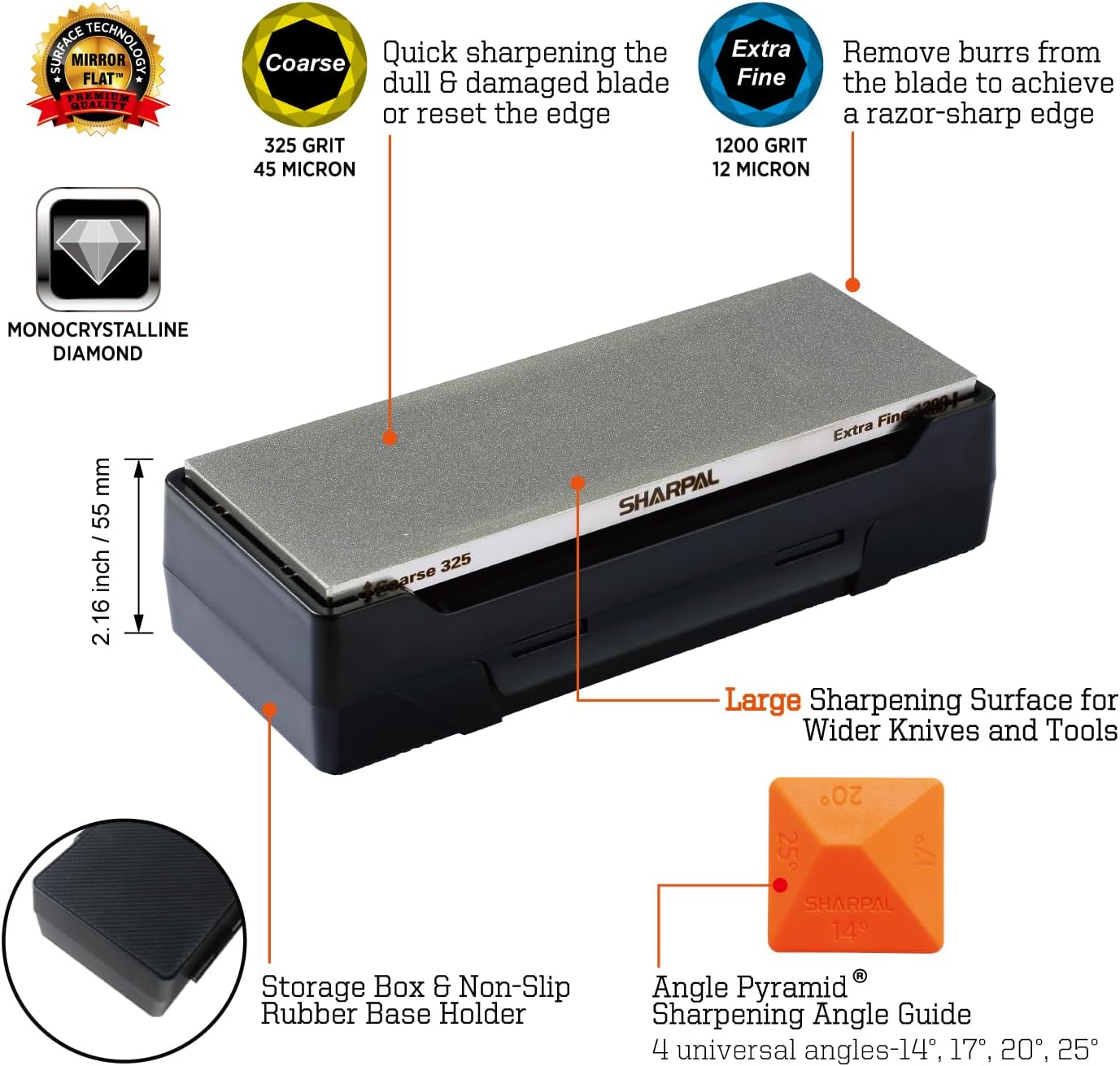
If you’ve ever tried to sharpen a modern knife with whatever flat gray stone came in the box — and ended up with an edge that felt almost as dull as when you started — you’ve run into one of the most frustrating mismatches in the knife world: wrong abrasive for the steel. The stone you use to sharpen a blade isn’t one-size-fits-all. Different steels have different hardness levels and internal structures, and some require significantly more abrasive cutting power just to remove metal. This guide compares two main families of sharpening stones — diamond plates (which use industrial diamonds embedded in a metal or resin surface to grind steel) and Japanese waterstones (which use ceramic abrasive particles suspended in a softer binder that breaks down as you sharpen, always exposing fresh cutting edges) — across three popular, demanding blade steels: D2, S30V, and MagnaCut. By the end you’ll have a clear framework for choosing, not a shopping list that costs you money on stones that won’t do the job.
| EDITOR'S PICK[SHAPTON Ha No Kuromaku Ceramic](https://www.amazon.com/dp/B01FYEYKD4?tag=greenflower20-20)… | Mid-tier[SHARPAL 156N Double-sided Diamo](https://www.amazon.com/dp/B07GRWN1PV?tag=greenflower20-20)… | Budget pick[KING KW65 1000/6000 Grit Combin](https://www.amazon.com/dp/B001DT1X9O?tag=greenflower20-20)… | |
|---|---|---|---|
| Grit types | #1000 + #5000 | 325 + 1200 | 1000 + 6000 |
| Stone type | Ceramic | Diamond | — |
| Material | — | Diamond | — |
| Size | — | 6 in. x 2.5 in. | — |
| Price | $99.80 | $44.99 | $37.44 |
| See on Amazon → | See on Amazon → | See on Amazon → |
Why the Steel You Own Changes Everything
The core issue is hardness and carbide content. Carbides are tiny, extremely hard particles scattered through a knife’s steel matrix — they’re what makes high-alloy steels wear-resistant in the field. The problem: they resist your sharpening stone almost as well as they resist wear in use.
Here’s a quick snapshot of what you’re working with:
| Steel | Typical HRC | Carbide Type | Sharpening Difficulty (1–5) |
|---|---|---|---|
| D2 | 60–62 | Chromium carbides, large | 4 KING — $37.44 |
| S30V | 59–61 | Vanadium carbides, medium | 4 SHARPAL — $44.99 |
| MagnaCut | 61–63 | Mixed, finer distribution | 3.5 SHAPTON — $99.80 |
Hardness ratings per BladeHQ product listings and manufacturer specs. Sharpening difficulty ratings synthesized from KnifeInformer’s steel guide and aggregated owner reports at Bladeforums.com.
Larrin Thomas at Knife Steel Nerds — whose carbide-volume analyses are among the most cited technical resources in the blade community, published under the article title “MagnaCut: A New Stainless Steel” — has documented that vanadium carbides (the dominant hard phase in S30V) are significantly harder than the chromium carbides in D2. That difference is the reason S30V owners often report slower progress on standard aluminum oxide stones. MagnaCut, which Thomas developed, was engineered with a finer, more uniform carbide distribution — the design intent being improved toughness and easier sharpening relative to S30V without sacrificing edge retention. Owner reports aggregated on Bladeforums.com largely confirm that outcome in practice.
The upshot: carbide type and hardness determine whether a given stone can actually cut your steel — or just polish the surface while leaving the edge geometry barely changed.
Diamond Stones: The Brute-Force Option That Earns Its Keep
Diamond stones work on a simple principle — industrial diamond particles are harder than anything in your knife, full stop. Nothing in D2’s chromium carbide array, S30V’s vanadium carbides, or MagnaCut’s matrix is going to slow a quality diamond plate down. They cut fast, stay flat, and require nothing more exotic than water or dry use to work.
D2: Where Diamond Plates Pull Ahead of Every Alternative
D2 is a tool steel that sits in a genuinely awkward middle zone — it’s not a stainless, it’s not the toughest chrome-moly carbon steel, and those chunky chromium carbides make it slow to sharpen on softer abrasives. Diamond plates are the consistent recommendation in long-run Bladeforums.com threads on D2 ownership, particularly for reprofile work or getting a neglected edge back into shape. Owner reports across those threads describe the speed difference as substantial — what a diamond plate handles in ten minutes can take forty minutes or more on a comparably aggressive waterstone.
For someone who owns a D2 field knife and sharpens infrequently, a coarse diamond plate is not a luxury — it’s the only tool that makes the task feel manageable. Outdoor Life’s coverage of sharpening gear for working knives has consistently positioned diamond plates as the practical choice for hard, high-carbide steels exactly because of this cutting speed advantage.
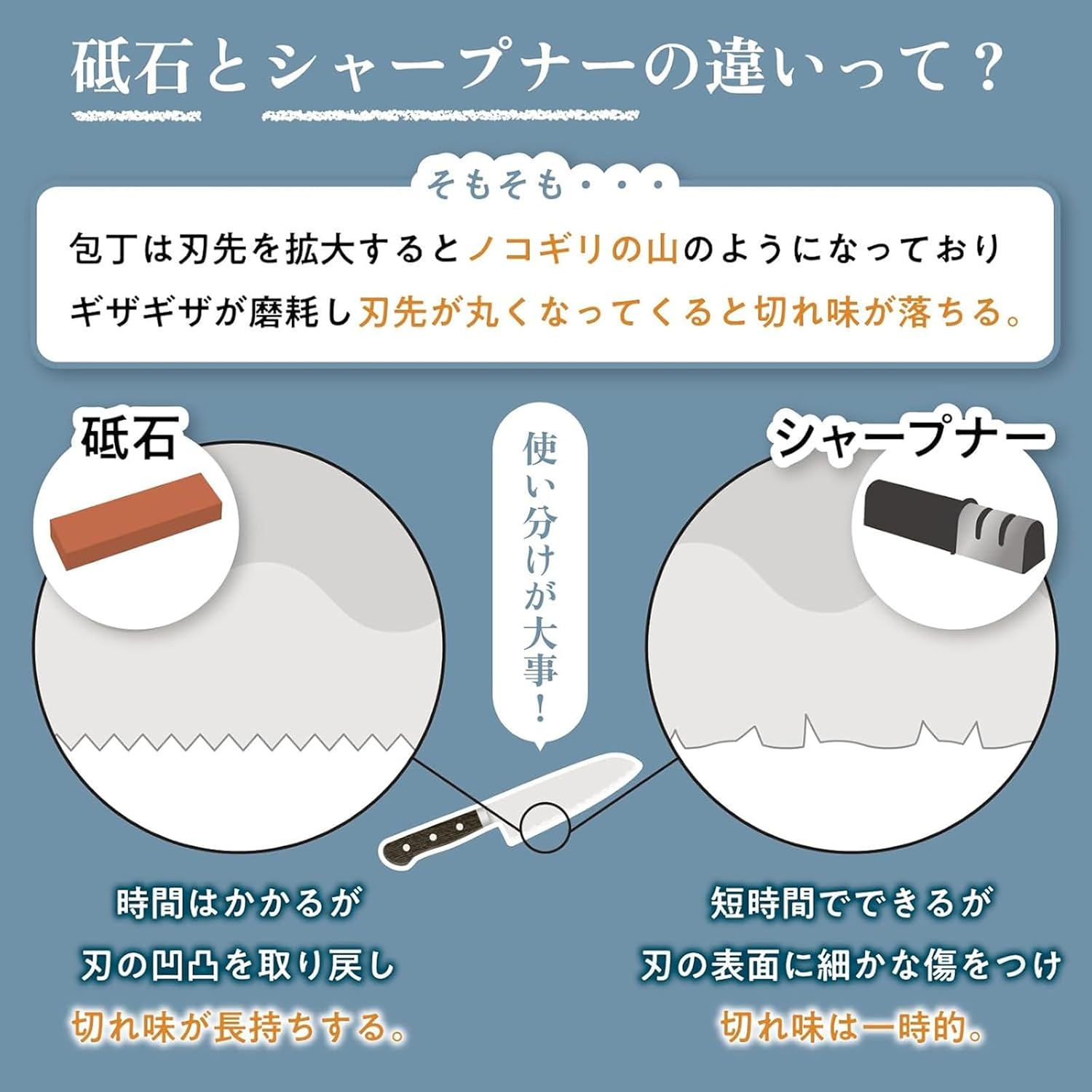
KING
$37.44
In stock on Amazon
Check price on AmazonS30V at HRC 60+: Diamond for Heavy Work, Waterstone for Finishing
Vanadium carbides are extremely wear-resistant by design — that’s literally the point of putting them in the steel. Owners across aggregated Bladeforums.com sharpening threads consistently report that waterstones below roughly 2000 grit struggle to make meaningful progress on S30V, especially when a blade hasn’t been touched in months. Diamond plates in the 200–400 grit range cut through that steel the way a coarse waterstone simply cannot.
That said, the tradeoff is real: diamond plates, particularly inexpensive electroplated versions, don’t produce the same quality of final edge as a fine waterstone. Coarse diamond abrades fast but leaves scratches. A 1000-grit diamond plate is not equivalent to a 1000-grit waterstone — the scratch patterns differ, and most practitioners report a noticeable edge-quality step-down at the finish end compared to good Japanese waterstones. The practical fix is using diamond only through your mid-work stages, then finishing on a fine waterstone or leather strop.
Sintered diamond stones — where diamonds are bonded into the structure rather than plated onto a surface — are meaningfully more durable than electroplated versions and hold consistent abrasive performance across their whole service life. Quality sintered options from manufacturers like DMT or Atoma run $60–$150 for a single stone, but owners consistently report they outlast multiple electroplated plates, per long-run gear discussion threads at Bladeforums.com.
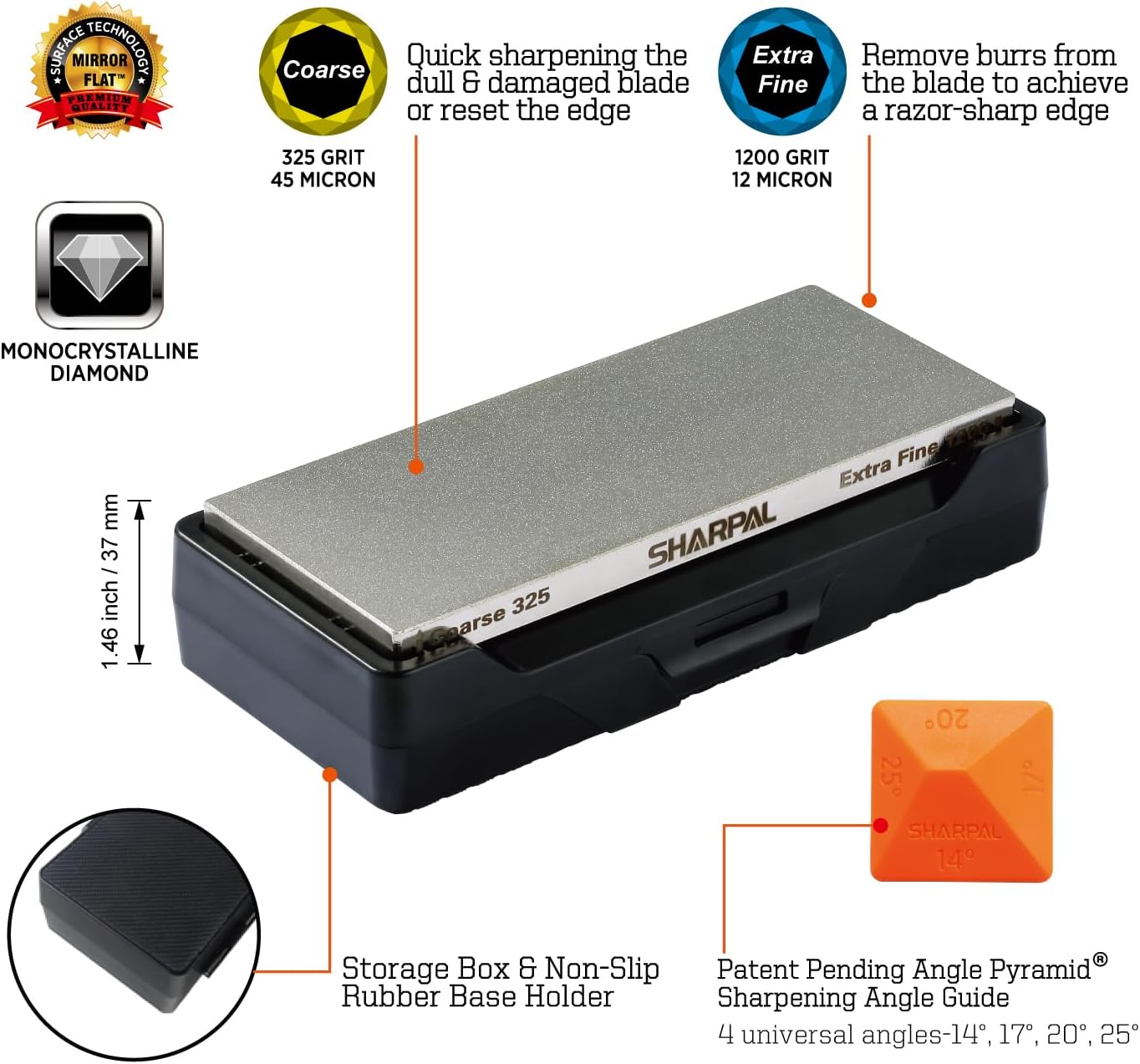
SHARPAL
$44.99
In stock on Amazon
Check price on AmazonMagnaCut: The Steel That Rewards a Waterstone System
Thomas’s original Knife Steel Nerds documentation of MagnaCut — in the article titled “MagnaCut: A New Stainless Steel” — emphasized the steel’s finer carbide distribution as a deliberate design advantage for sharpenability. Owner reports on Bladeforums.com confirm it: MagnaCut responds better to quality waterstones than S30V does. If MagnaCut is your primary steel, a good 1000/6000 combo waterstone system is entirely workable — you won’t feel like you’re fighting the blade the way D2 or S30V can make you feel on the same stones.
For MagnaCut owners building a sharpening kit from scratch, a mid-range synthetic waterstone combo covers most edge work without the need for a diamond plate as a starting point. KnifeInformer’s steel guide and sharpening difficulty ratings support this framing: MagnaCut’s engineered carbide structure genuinely reduces the abrasive power needed to initiate sharpening, which is a meaningful practical advantage for everyday users.
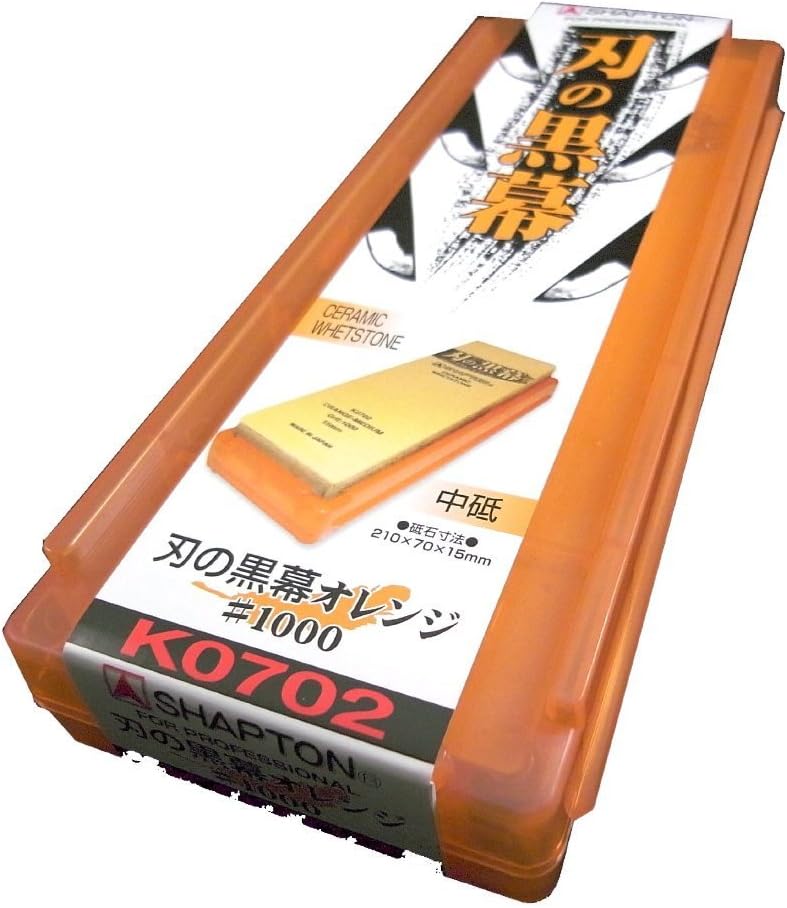
SHAPTON
$99.80
In stock on Amazon
Check price on AmazonJapanese Waterstones: Slower, but They Finish Better
Japanese waterstones — both natural and synthetic — work through a mechanism called swarf-assisted sharpening. As you sharpen, the stone releases old abrasive particles and generates a slurry of abraded steel and stone material. That slurry acts as an additional fine abrasive, which is part of why experienced sharpeners value the feedback and control these stones offer. You’re not just running steel over grit; you’re actively managing a sharpening system.
Where Waterstones Earn Their Place
Finishing edges is where waterstones have no equal in this price range. There’s a ceiling on the polish quality diamond plates can deliver, and waterstones — especially in the 3000–8000 grit range — push well past it. The scratch patterns are finer, more consistent, and the resulting edge geometry is cleaner. For a hunting blade you’re touching up between field uses, or an EDC folder that sees precision cutting, the finish quality difference is real and is documented in cutting tests discussed across Bladeforums.com sharpening threads.
Waterstones also reward skill development in ways diamond plates don’t. If you’re actively building freehand sharpening technique — learning to hold an angle by feel and read the burr (the tiny wire of metal that rolls to the opposite edge when you’ve sharpened one side fully) — waterstones give you more tactile feedback. The slurry, the resistance, and the sound all communicate what’s happening at the edge in real time.
The Tradeoffs You Need to Budget For
Waterstones require flattening. A synthetic 1000-grit waterstone develops a hollow or crown after regular use, and an uneven stone produces an uneven edge. Flattening stones or diamond lapping plates are a real maintenance requirement, not optional. For most knife owners who don’t sharpen frequently, this is the stone that sits in the drawer, develops a hollow, and produces a mysteriously poor edge six months later.
Waterstone prices vary considerably. A functional synthetic 1000/6000 combo from manufacturers like King or Naniwa runs $30–$60 and covers most edge work on MagnaCut or a routinely maintained S30V blade. Premium single-grit options from Shapton Glass or Naniwa Chosera lines run $80–$140 each and are the choice when you’re building a serious sharpening station — but they’re not the entry point for most buyers. BladeHQ’s product listings for production knives in D2, S30V, and MagnaCut confirm that most of these blades are already priced well above what a complete two-stone waterstone kit would cost, making the investment easy to justify.
The Decision Frame: If X, Then Y
Here’s the practical decision logic, stated plainly:
If your steel is D2 or well-used S30V and you need to reprofile or restart from a dull edge: Start on diamond. A 200–400 grit diamond plate will do in 10 minutes what a comparably aggressive waterstone might take 40 minutes to accomplish. Finish on a fine waterstone or strop. This approach is consistently reinforced in Bladeforums.com threads on hard-use tool steel maintenance.
If your steel is MagnaCut or a lightly maintained S30V, and you’re doing routine touch-ups: A quality synthetic waterstone system — 1000 grit to establish the edge, 3000–6000 to refine — is completely workable and will produce a better final finish than most diamond setups. KnifeInformer’s sharpening difficulty ratings for MagnaCut support this approach: the steel was designed to be easier to sharpen than comparable high-performance options, and that intention holds up in owner practice.
If you’re sharpening in the field on a hunting trip or long backcountry stretch: A compact diamond plate beats any waterstone on portability, durability, and zero-maintenance operation. Outdoor Life’s field-sharpening gear coverage has consistently named diamond plates as the practical backcountry choice for exactly these reasons — no leveling required, no water management, no fragility concerns.
If you’re building a home sharpening system and own multiple high-alloy blades: Buy both. A $60–$80 sintered or quality electroplated diamond plate for coarse-to-medium work, paired with a $40–$80 synthetic waterstone for finishing, covers every steel this guide addresses better than either system alone. The total cost is less than one mid-tier knife.
If your budget is constrained to one tool: For D2 or S30V — buy diamond. For MagnaCut — either works, but waterstones at 1000 grit are easier to manage for most people and produce a better edge finish.
A Note on Grit Equivalency and False Comparisons
One place buyers regularly get burned: treating grit numbers as equivalent across stone types. A “1000 grit” diamond plate and a “1000 grit” waterstone do not cut or finish the same way. Diamond particles are harder and cut more aggressively; the scratch pattern is coarser per nominal grit level. Larrin Thomas at Knife Steel Nerds has addressed this discrepancy in his technical writing on steel and sharpening science, and it is reinforced by the consistent owner pattern documented on Bladeforums.com: people who switch from diamond to a same-grit waterstone for finishing are often surprised to find the waterstone feels almost coarser before the slurry builds. This isn’t a defect — it’s a different mechanism producing a different scratch geometry.
The practical implication: if you’re building a two-stone system, expect to use a finer grit waterstone than your diamond plate’s nominal number to achieve equivalent or better finish. A 400-grit diamond into a 3000-grit waterstone is a more common real-world pairing than the grit numbers alone suggest, and this progression appears repeatedly in Bladeforums.com sharpening discussions as an accepted best practice for high-alloy steels.
The sharpening tool market has matured to the point where there are no secret options — the major manufacturers are well-documented across buyer communities, and owner testimony at scale is available through Bladeforums.com and in gear coverage from Outdoor Life and Field and Stream. The choice is about matching tools to steels, not chasing premium branding. Spend the money on the stone that matches the steel in your pocket, not the one with the best packaging.