May 5, 2026 • Callum Reeve • 9 min reading time • Specs verified June 5, 2026
D2 Steel Fixed Blades: What the Metallurgy Actually Means for Camp and Field Use
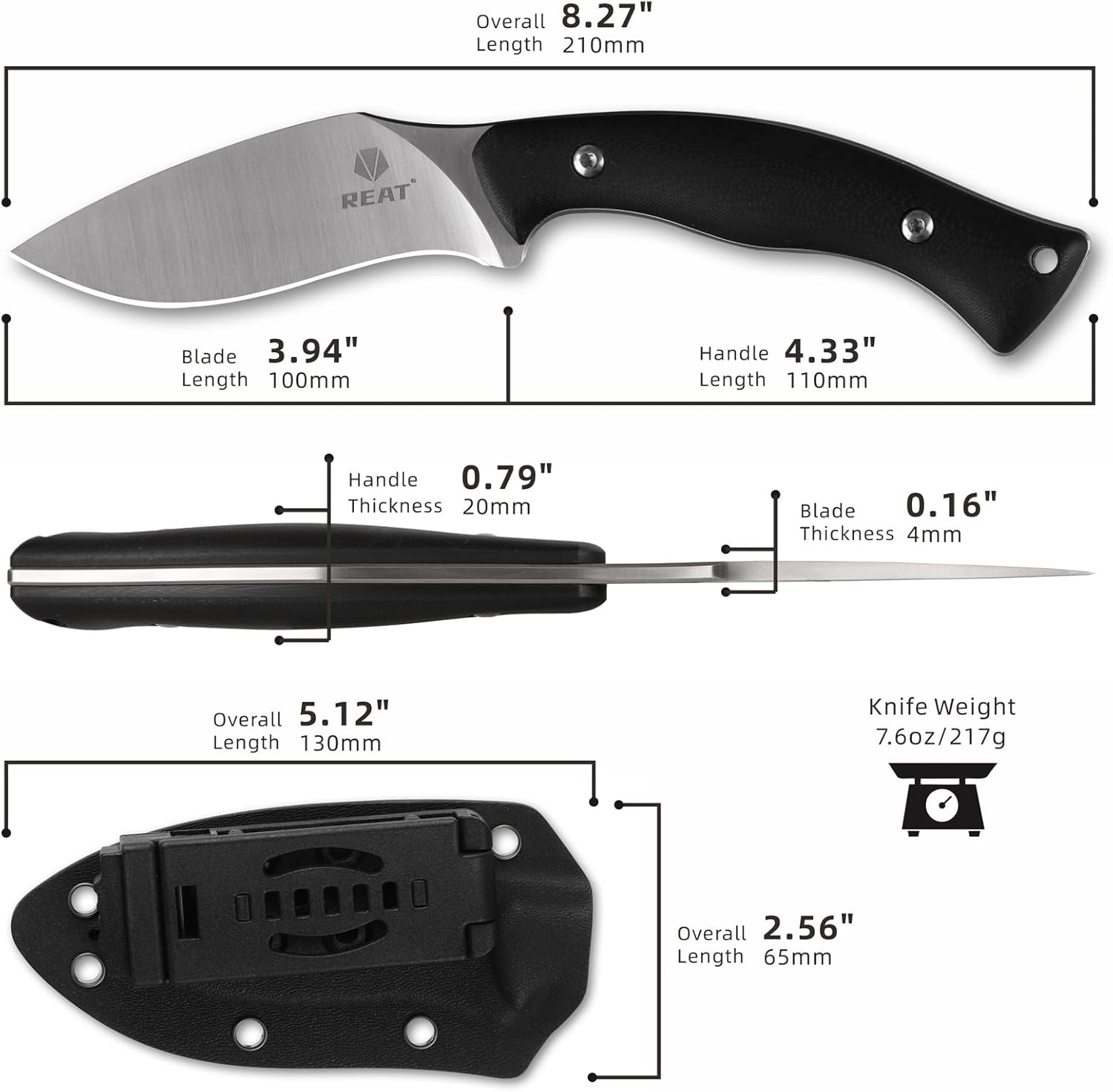
If you’ve been shopping for a fixed blade — a knife with a solid, non-folding blade that runs through the full length of the handle — you’ve almost certainly run into “D2 steel” on the spec sheet. Steel type matters because it determines how sharp an edge gets, how long it stays that way, how easily it rusts, and how difficult it is to sharpen back up when the time comes. D2 sits in a peculiar middle zone: it’s tougher and more corrosion-resistant than many budget steels, but it comes with real tradeoffs that don’t always get named honestly in product listings. This guide explains what D2 actually is at the chemistry level, what that translates to on a hunting trip or base camp setup, and how to decide whether a D2 fixed blade is the right tool for what you’re actually doing — or whether you’d be better served spending the same $80–$180 somewhere else.
| EDITOR'S PICK[Kizer Cabox Fixed Blade Knife](https://www.amazon.com/dp/B0D6QVSJF2?tag=greenflower20-20) | Mid-tier[Dragon Creek Tactical Knife Kyd…](https://www.amazon.com/dp/B0F2696JHG?tag=greenflower20-20) | Budget pick[REAT Fixed Blade Knife with Kyd…](https://www.amazon.com/dp/B0FJ8DGDPB?tag=greenflower20-20) | |
|---|---|---|---|
| Blade Length | 3.36" | — | 4" |
| Sheath Material | — | Kydex | Kydex |
| Full Tang | — | ✓ | — |
| Price | $53.10 | $29.99 | $19.49 |
| See on Amazon → | See on Amazon → | See on Amazon → |
What D2 Actually Is — The Chemistry in Plain English
D2 is a tool steel, meaning it was originally developed for industrial cutting tools — punches, dies, and shear blades in manufacturing — not for knives. It belongs to a family of high-carbon, high-chromium steels, and those two elements are where its personality comes from.
The numbers that matter:
| Property | D2 (typical) | 1095 (budget baseline) | S35VN (premium benchmark) |
|---|---|---|---|
| Carbon content | ~1.5% | ~0.95% | ~1.4% |
| Chromium content | ~11–12% | <0.5% | ~14% |
| Typical Rockwell hardness (HRC) | 58–61 | 56–58 | 59–61 |
| Corrosion resistance | Moderate | Poor | Good |
| Toughness | Moderate | High | Moderate–High |
The high carbon content (around 1.5%) means D2 can be hardened to hold a keen, fine edge — higher carbon generally allows finer grain structure and better edge retention. The high chromium content (11–12%) is what separates D2 from classic high-carbon steels like 1095 or O1: that much chromium pushes D2 toward the stainless threshold (which technically begins around 13% chromium), but it doesn’t quite cross it. This is the source of D2’s most-discussed quirk: it’s often marketed as “semi-stainless,” and that phrase does real work. It rusts more slowly than 1095 in damp conditions, but it absolutely will rust if you neglect it — especially at the grind line and near the edge, where the steel’s protective chromium-carbide structure is disrupted.
Knife Steel Nerds’ analysis of D2 composition notes that the chromium in D2 forms large chromium carbides rather than going fully into solution the way it does in stainless alloys — which is part of why D2’s corrosion resistance is “semi” rather than full, and also why D2 can be tricky to sharpen: those large carbides resist abrasion.
The Real-World Performance Tradeoffs
Understanding the chemistry is only useful if it maps to field behavior. Here’s how D2’s properties cash out in actual use:
Edge Retention: Better Than Budget, Not as Good as Premium
D2’s high carbide content and typical hardness window of 58–61 HRC means it holds an edge meaningfully longer than softer, simpler steels like 420HC (common in entry-level knives) or even 1095. For camp chores — batoning kindling, breaking down small game, whittling stakes — owners and long-run reviewers consistently note that D2 blades stay sharp through a full weekend of use where softer steels would need a touch-up by Saturday afternoon.
That said, in the premium tier, D2 loses its luster quickly. Steels like CPM-3V, S35VN, and 20CV are manufactured through a powder metallurgy process that distributes carbides more evenly, producing finer grain structures and genuinely superior edge retention and toughness. Knife Informer’s comparative steel roundup places D2 solidly in the mid-tier: better than budget, noticeably behind the best modern stainless and semi-stainless PM steels at similar hardness levels.
The honest verdict: D2’s edge retention earns its place in the $80–$180 price window. If you’re spending $300+, you should expect better.
Toughness: The Hidden Weakness
Here’s the tradeoff that doesn’t get enough airtime in marketing copy. D2’s large carbide structure, while good for edge retention, reduces toughness — defined as a steel’s ability to absorb impact without chipping or cracking. Compared to 1095 or A2 tool steel, D2 is more brittle under lateral stress.
In practice, this matters when:
- You’re batoning (driving the spine of the knife through wood with a baton) aggressively in cold temperatures, where steel becomes more brittle across the board
- The blade geometry is thin behind the edge (a fine hollow or flat grind with a thin primary bevel) — D2 doesn’t forgive a too-thin edge geometry the way a tougher steel like CPM-3V does
- You’re prying, which you shouldn’t do with any knife but especially not with D2
Gear Junkie’s fixed blade reviews consistently flag toughness as the criterion that separates D2 from premium tool steels like CPM-3V in hard-use bushcraft and survival contexts. For hunters doing clean field dressing and processing work, this is less likely to matter. For serious batoning or survival-scenario use, it’s a real consideration.
Corrosion Resistance: Manageable, But Don’t Ignore It
“Semi-stainless” means you need a maintenance habit. Field conditions that cause problems with D2:
- Processing game and not wiping the blade within an hour (blood and body fluids are corrosive)
- Coastal or high-humidity environments without regular light oiling
- Leaving a wet knife in a leather sheath (leather holds moisture against the blade)
The grind line — where the flat of the blade meets the beveled edge — is where D2 oxidation typically starts, because the steel structure is disrupted there. Owners in long-run BladeForums threads note that a simple habit of wiping and applying a light coat of mineral oil or Ballistol after every use keeps D2 in good condition indefinitely. It’s not a daily ordeal; it’s a two-minute routine.
If you’re in the Pacific Northwest, hunting coastal Alaska, or doing a lot of waterfowl work where knives get wet repeatedly, D2 requires more attention than a true stainless steel would — and that tradeoff is worth naming explicitly before purchase.
Sharpening: Plan for the Learning Curve
D2’s large chromium carbides mean it doesn’t respond the same way to sharpening as simpler steels. Many intermediate sharpeners report frustration with D2 when using basic aluminum oxide or soft Arkansas stones — the steel resists cutting, especially when fully dulled. The pattern across aggregated reviews: D2 rewards diamond stones or CBN (cubic boron nitride) lapping films, and it prefers a slightly more obtuse edge angle (around 20–22 degrees per side for a camp knife, rather than the 15–17 degrees some high-end stainless blades are set at). At the right angle with the right abrasive, D2 takes a very refined edge. With the wrong tools or technique, it’s a frustrating experience.
Blade HQ’s steel comparison resources note that D2 is typically rated “moderate” on sharpenability — harder to bring back than 1095 or VG-10, easier than high-vanadium steels like S110V. Budget some time to understand your sharpening setup before the trip, not during it.
Where D2 Fixed Blades Actually Make Sense
Given all of the above, here’s the decision framework:
D2 is a strong choice if:
- Your budget is $80–$180 and you want genuine step-up edge retention from budget steels
- Your primary use is clean, controlled cutting work: skinning, camp food prep, whittling, light wood processing
- You’re willing to build a simple maintenance habit (wipe, oil, dry storage)
- You’re in a temperate or dry climate, or you’re disciplined about moisture management
- You’re buying from a maker or production company with a proven heat treat — D2 is significantly more forgiving of good heat treatment and significantly worse when heat treat is mediocre (a key reason the same D2 performs very differently across brands)
D2 is the wrong choice if:
- You need maximum toughness for batoning or survival-scenario abuse — look at CPM-3V fixed blades instead
- You’re working in persistently wet environments and don’t want a maintenance obligation — look at S35VN or H1 for saltwater contexts
- You’re at the $300+ tier — at that price, powder metallurgy steels offer genuinely better performance, and D2’s value proposition disappears
- You’re a set-it-and-forget-it user who won’t maintain the edge or oil the blade — D2 will punish neglect more visibly than a true stainless
Outdoor Life’s best fixed blade roundups (current through early 2026) consistently recommend D2 blades as a “best value” pick in the mid-tier, but caveat that hunters and guides doing high-volume wet work should consider stepping to a higher-chromium stainless option.
Brands and Makers Worth Knowing at the D2 Tier
At the production level, several makers have built strong reputations with D2 specifically because they’ve dialed in their heat treatment:
ESEE Knives — ESEE uses 1095 as their house steel, not D2, but they represent the benchmark against which D2 mid-tier knives compete on toughness. Worth knowing as a comparison point.
Condor Tool & Knife — Offers several D2 fixed blades in the $80–$120 range; owners consistently report solid heat treatment and reliable performance for the price.
Civivi and WE Knife (fixed blade lines) — Chinese production houses that have genuinely invested in heat treat quality; D2 blades from these makers receive consistent positive long-run feedback on forums for edge retention in the $60–$100 window.
Ontario Knife Company — Uses D2 in several working fixed blade designs; operators in long-run reviews note good toughness for the price point, which suggests a slightly softer heat treat (lower HRC end of the range) — a deliberate tradeoff.
At the custom and semi-custom tier, D2 has largely been displaced by CPM-3V for hard-use fixed blades — most makers who built reputations on D2 have migrated upward. If a custom maker is still offering D2 at $300+, it’s worth asking why specifically, because the answer matters.
The Bottom Line
D2 is an honest, capable steel in the right context — and an oversold one in the wrong context. The chemistry gives you real edge retention and reasonable corrosion resistance at a price point that makes sense. It asks for correct sharpening tools, a maintenance habit, and edge geometry that respects its toughness limits.
If you’re buying a fixed blade for general camp and hunting use in the $80–$180 range and you’ll actually maintain it, D2 is a legitimate choice. If you’re spending more, or if wet conditions and hard-use abuse are your primary scenarios, the metallurgy points you elsewhere — and being honest about that is more useful than making D2 sound like something it isn’t.