May 26, 2026 • Callum Reeve • 9 min reading time • Specs verified June 5, 2026
The Best EDC Folders Under $60: Steel Grades, Lock Types, and What Forum Owners Say Two Years In
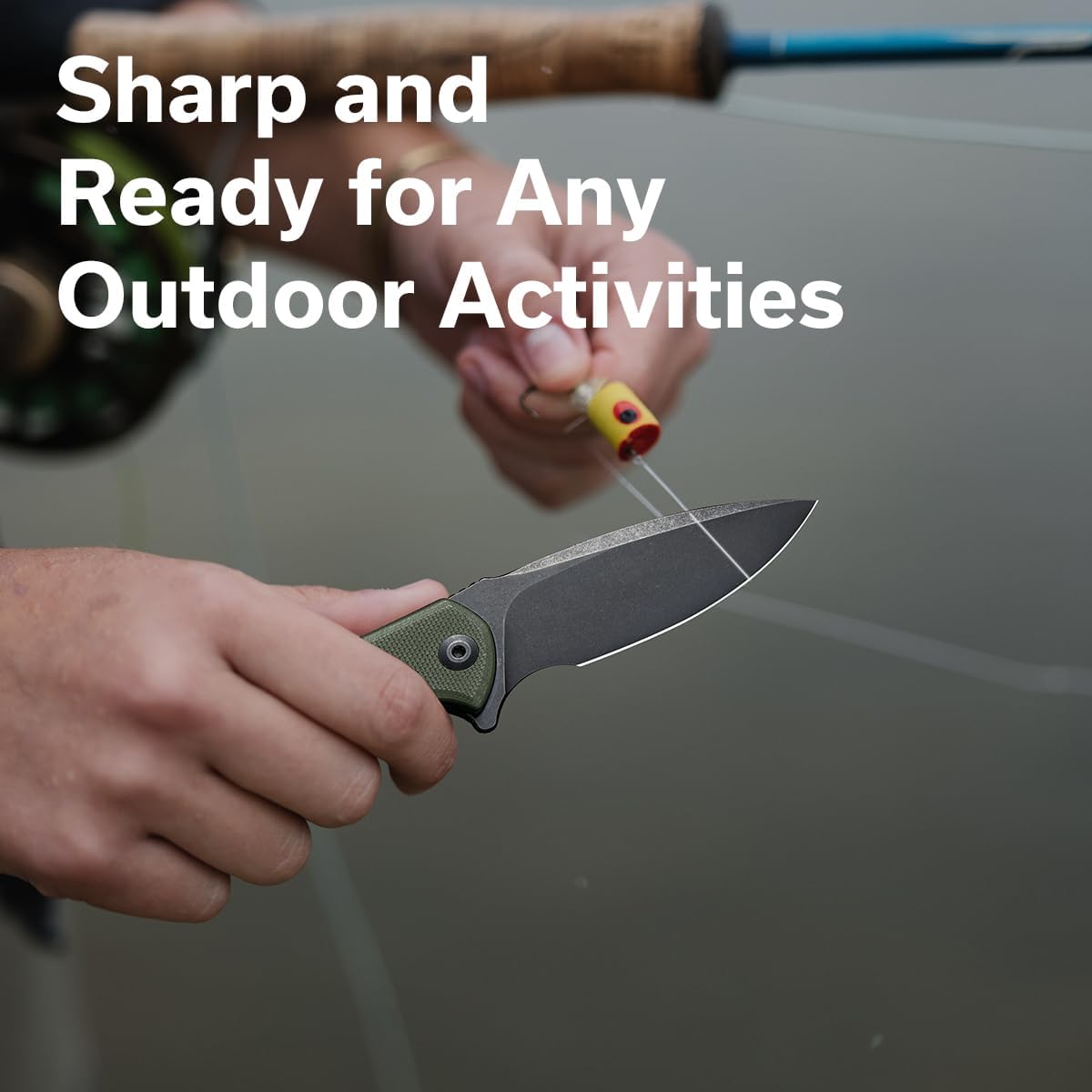
An EDC folder — that’s an “everyday carry” folding knife, the kind that rides in your pocket, clips to your waistband, and handles everything from cutting open Amazon boxes to slicing cordage on a trail — is one of the best low-risk ways to figure out what you actually value in a blade before you spend serious money. At under $60, you’re not locked into a commitment. But “budget” doesn’t have to mean “throwaway.” The gap between a $15 gas-station knife and a thoughtfully engineered $50 folder is enormous, and this guide exists to map it. We’ll cover the three steels you’ll see most often at this price point, the two lock types worth caring about, and — critically — what people who’ve been carrying these knives daily for two or more years are actually saying about them.
The Steel Reality at This Price Point
Let’s be honest upfront: below $60, you’re not getting CPM-3V or S35VN. Premium “super steels” require expensive powder-metallurgy processing, and that cost has to land somewhere. What you will find is a small cluster of mid-carbon stainless steels that, when heat-treated properly by a reputable manufacturer, punch well above their price tag.
8Cr13MoV is the most common steel in sub-$60 folders from Chinese manufacturers including Kershaw (many of their import-line blades), CRKT, and Spyderco’s entry Byrd sub-brand. It’s a rough analog to AUS-8, landing around 57–59 HRC (Rockwell hardness — a scale where higher numbers mean harder steel that holds an edge longer but becomes more brittle). Knife Steel Nerds’ composition breakdowns show 8Cr13MoV carrying roughly 0.8% carbon and 13–14% chromium, which delivers adequate corrosion resistance and an edge that sharpens fast — sometimes too fast, meaning it can feel like it dulls fast too. Long-run BladeForums threads on 8Cr13MoV serviceability consistently surface the same verdict: it’s fine for light daily tasks, but two years in, owners notice more frequent touchups than they’d like, especially in humid or saltwater environments.
AUS-8 (made by Aichi Steel in Japan) runs a similar composition but with slightly tighter quality-control tolerances. Knife Informer’s budget EDC overview notes that AUS-8 blades from Ontario Knife Company and Cold Steel’s mid-range lineup tend to show better edge consistency out of the box, likely due to more controlled heat treatment processes. Forum owners typically rate AUS-8 edge retention marginally better than 8Cr13MoV in side-by-side comparisons — not dramatically, but enough to notice over months of use.
14C28N (Sandvik’s steel, used almost exclusively by Kershaw on their USA-assembled lines and by Mora on fixed blades) is the surprise performer here. Knife Steel Nerds ranks 14C28N above both 8Cr13MoV and AUS-8 for edge retention per unit of carbon, and owners across BladeForums threads on the Kershaw Blur and Leek — both of which land just at or under the $60 ceiling — report it sharpens more easily than higher-hardness steels while still holding a working edge through weeks of daily use. If you’re in this price band and you want the most technically defensible blade steel for the dollar, 14C28N is the answer right now.
By the Numbers
| Steel | Typical HRC | Corrosion Resistance | Edge Retention (relative) | Sharpenability |
|---|---|---|---|---|
| 8Cr13MoV | 57–59 | Good | Baseline | Easy |
| AUS-8 | 57–59 | Good | Slight edge over 8Cr | Easy |
| 14C28N | 58–62 | Very good | Best of the three | Moderate-easy |
Lock Types: The Decision You’ll Actually Feel Every Day
A folding knife’s lock is the mechanism that keeps the blade open while you’re using it and allows you to close it safely. At this price point, two systems dominate: liner locks and frame locks. Understanding the difference isn’t just trivia — it shapes how the knife feels in your hand, how it wears over years, and whether it’s appropriate for harder tasks.
Liner locks use a thin internal metal strip (the liner) that snaps laterally behind the blade tang when it’s open. They’re the default on the majority of sub-$60 folders because they’re inexpensive to manufacture. Blade HQ’s buyer’s guide to lock types notes that liner locks work reliably when new, but quality varies enormously based on the thickness and spring tension of that liner strip. Cheaper executions walk — meaning the lock bar can migrate away from the blade tang over time, introducing wobble. Owners in Gear Junkie’s 2025 folding knife roundup who’ve carried liner-lock folders for 18–24 months report that mid-range manufacturers (Kershaw, CRKT, Spyderco Byrd) hold up better than the budget-import alternatives, where liner migration becomes noticeable around the one-year mark under daily use.
Frame locks (also called integral locks or Reeve Integral Locks at the premium end — Chris Reeve Knives popularized the refined version) cut the lock directly into the handle frame itself. Because the frame material is typically thicker than a liner, frame locks often feel more solid and can tolerate harder use before showing slop. At the $40–$60 window, you’ll find frame locks on handles made from aluminum or stainless steel — both adequate. Owners consistently report that frame-lock folders feel “more confidence-inspiring” for tasks with lateral blade stress, like batoning kindling or scraping. The trade-off: frame-lock folders at this price tend to be heavier than liner-lock alternatives.
The decision rule here: If you’re using the knife primarily for light EDC — packages, food prep, cordage — a quality liner lock from a reputable manufacturer is fine and often lighter in the pocket. If you’re pushing the knife toward harder utility work, pay the slight weight penalty for a frame lock. Don’t try to split the difference with the cheapest example of either type.
Specific Knives Worth Your Attention
Rather than ranking a list of ten, here are four models that surface repeatedly in two-year-and-beyond owner discussions — with honest context on each.
Kershaw Blur (14C28N, ~$55–$60): Consistently cited in Knife Informer’s budget guide and long-run BladeForums threads as the steel-value leader in this band. The assisted-opening mechanism divides opinion — some owners love the one-hand deployment speed, others find the spring tension fatiguing after months. The aluminum handle keeps weight low. Two-year owners report minimal lock walk and consistent edge retention that surprises people expecting more from a sub-$60 blade.
Spyderco Byrd Cara Cara 2 (8Cr13MoV, ~$35–$40): Spyderco’s import sub-brand exists specifically to bring the brand’s ergonomic geometry and round-hole deployment to buyers who can’t spend $100+. Gear Junkie’s roundup includes it as a gateway knife for people upgrading from disposable folders. The 8Cr13MoV steel is the weakest link — owners in two-year threads recommend learning to strop it regularly — but the fit, finish, and ergonomics are genuinely Spyderco-quality. Think of it as buying the platform cheaply, then upgrading later.
CRKT Drifter (8Cr13MoV, ~$25–$30): The budget anchor of this roundup. Knife Informer’s overview notes it as one of the most-reviewed sub-$30 folders online, and BladeForums owners who’ve carried it for two years reliably report the same thing: it’s not a performance knife, it’s a beater. The liner lock is functional but basic. Steel requires frequent maintenance. Where it earns its mention is durability under abuse — owners who’ve dropped it, lost it, and found it report it still opens and closes cleanly. If you need a knife you won’t cry over losing, this is the honest choice.
Ontario RAT 2 (AUS-8, ~$30–$35): The RAT 2 has become something of a benchmark conversation piece on BladeForums, partly because it’s been in production long enough to have genuine multi-year testimony. AUS-8 at Ontario’s heat treatment is frequently cited as performing above the steel’s reputation. The liner lock on the RAT 2 is thicker than average for the price, and two-year owners rarely report lock walk. Gear Junkie’s roundup consistently uses it as a comparison baseline for other budget folders. It’s not exciting — but “not exciting after two years” is a compliment in this category.
What Forum Owners Actually Regret
Aggregating long-run BladeForums and Knife Informer community threads on sub-$60 EDC folders surfaces a consistent pattern of regrets that aren’t always obvious at purchase time.
Clip placement and pocket wear. Several knife designs in this price band offer tip-up carry only (meaning the blade tip points toward the top of your pocket). A meaningful number of two-year owners report that tip-up carry with a sharp blade eventually wears through pocket fabric. Check whether a knife offers reversible or tip-down clip options before buying.
G10 vs. plastic handles at this tier. G10 (a fiberglass laminate — textured, grippy, and nearly impervious to moisture) shows up on a handful of folders at this price, most notably the Ontario RAT 2. Owners who’ve tried both consistently prefer G10 for wet-hand grip and long-term aesthetics — plastic handles scuff and discolor noticeably by year two.
Assisted opening mechanisms. SpeedSafe and similar torsion-bar-assisted openers (common on Kershaw) get praise for speed but complaints about pocket deployment — the knife can open against the clip when jostled. A notable subset of two-year owners disable the spring mechanism and convert to manual opening. Worth knowing before you buy.
The Decision Framework
Here’s the plain-language version of everything above, structured as decision rules:
If steel longevity matters most and you’re willing to spend up to $60: buy the Kershaw Blur for the 14C28N steel. You’re getting the best edge-retention-per-dollar in the category, and the two-year owner testimony is consistently positive on that front.
If you want Spyderco ergonomics without Spyderco pricing: the Byrd Cara Cara 2 delivers the handle geometry and round-hole deployment at a price where losing it won’t sting. Accept that you’ll be sharpening more frequently and budget for learning to strop.
If this is a beater or a first knife: the Ontario RAT 2 is the most defensible $30–$35 spend, with better-than-average lock quality and steel heat treatment for the price. The CRKT Drifter slots below it if you need to go cheaper still.
If you’re comparing this tier to the next one up: be honest with yourself. The $80–$120 window (ESEE, Benchmade Bugout, Spyderco Tenacious) brings steels like 154CM and D2 that genuinely do hold an edge longer with less maintenance. If you’ll carry and use this knife daily for two-plus years, the math often favors spending slightly more once. But if you’re still figuring out what you value — blade length, lock type, carry position — buy in this tier first, use it for a year, and upgrade with real information.
The sub-$60 market is crowded, but it’s not a lottery. Stick to 14C28N or AUS-8, verify the lock type fits your use case, and favor brands with enough production volume to have genuine multi-year owner testimony. You’ll come out with a capable tool — and a much clearer sense of what you actually want next.